Fortinet white logo
Fortinet white logo

Administration Guide

WAF features against bot attacks

WAF features against bot attacks

Bot attacks are malicious activities carried out by automated software programs, known as bots. These attacks exploit vulnerabilities in web applications, APIs, and network infrastructure to achieve various malicious goals, such as data theft, service disruption, or fraud. Unlike legitimate bots (e.g., search engine crawlers), malicious bots are designed to mimic human behavior and can execute tasks at a scale and speed that humans cannot match.

FortiWeb offers a range of features specifically designed to detect and mitigate bot attacks, providing robust protection for web applications and APIs. Using a combination of behavioral analysis, AI-based detection, and rate-limiting controls, FortiWeb can identify and block malicious bots while ensuring a seamless experience for legitimate users.
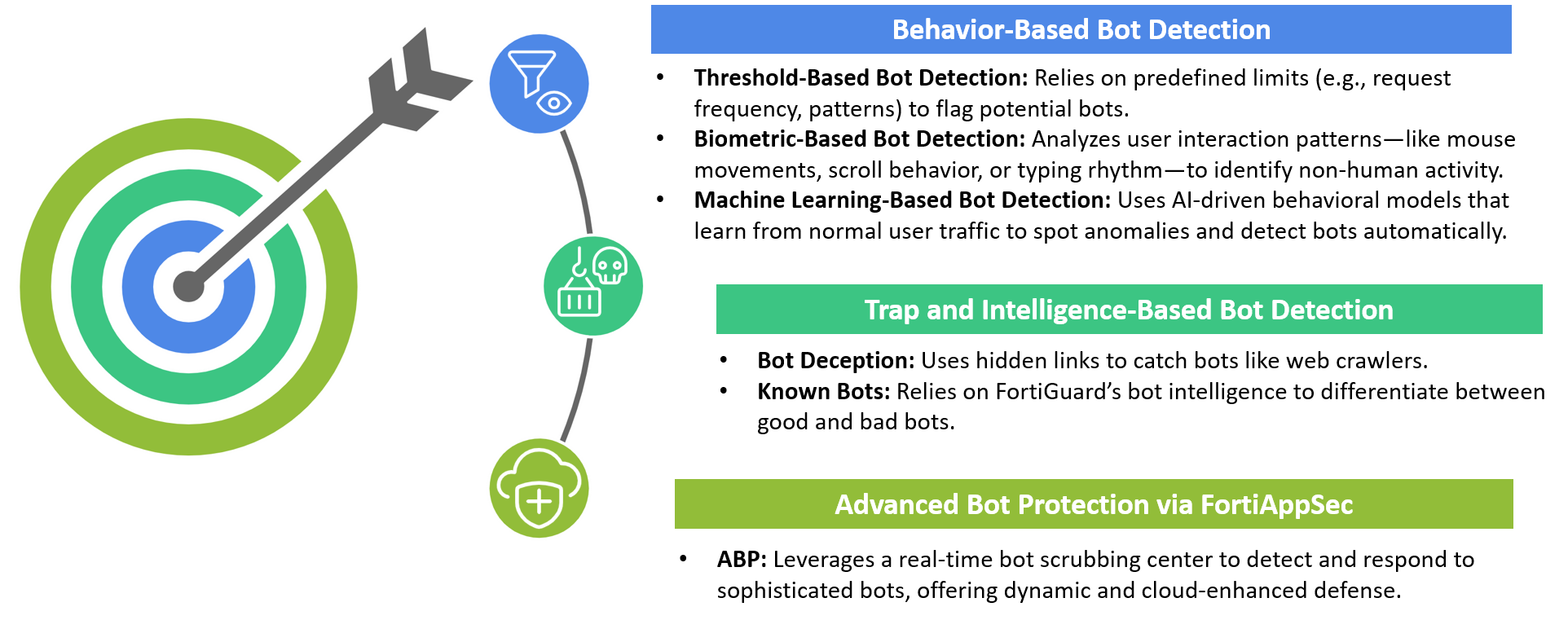
Here are the key features FortiWeb employs to defend against bot attacks.

Biometrics-Based Bot Detection

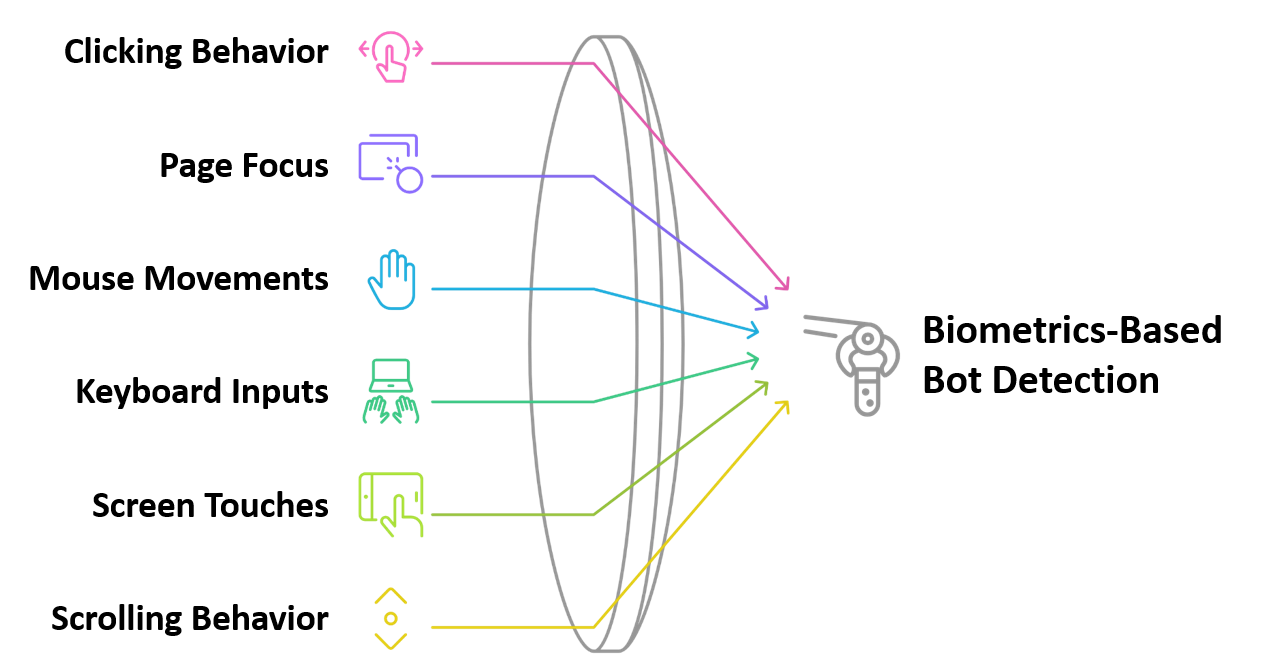
FortiWeb’s Biometrics-Based Bot Detection is a sophisticated feature designed to differentiate between human users and bots by analyzing client-side interactions, such as mouse movements, keyboard inputs, screen touches, and scrolling behavior. This method provides a more nuanced approach to bot detection, particularly useful for mitigating advanced bots that can bypass simpler detection mechanisms like IP blocking or user-agent validation.

Watch the video on Biometrics-Based Bot Detection by clicking this link or accessing it via the right sidebar.

Threshold-Based Bot Detection

FortiWeb’s Threshold-Based Bot Detection is a feature that helps distinguish between human users and automated bots by monitoring for suspicious behaviors that occur at abnormal rates, such as the frequency of 403 and 404 response codes, attack signatures, slow attack activities, content scraping activities, and illegal user scan.

Watch the video on Threshold-Based Bot Detection by clicking this link or accessing it via the right sidebar.

Bot Deception

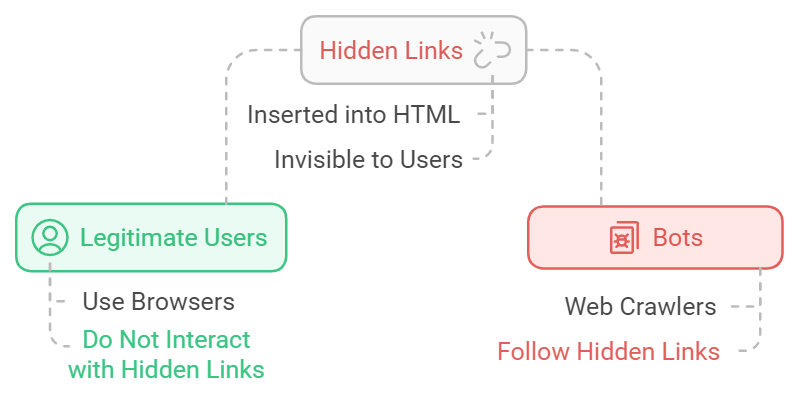
FortiWeb’s Bot Deception feature is a proactive defense mechanism designed to detect and trap malicious bots, such as web crawlers, by inserting hidden links into the HTML response pages. Legitimate users, such as human visitors using a browser, will not interact with these invisible links, but bots (especially web crawlers) may inadvertently follow these links, exposing their automated behavior. Once identified, FortiWeb can take action against these bots, such as blocking their requests or logging the activity for further investigation.

Watch the video on Bot Deception by clicking this link or accessing it via the right sidebar.

Known Bots

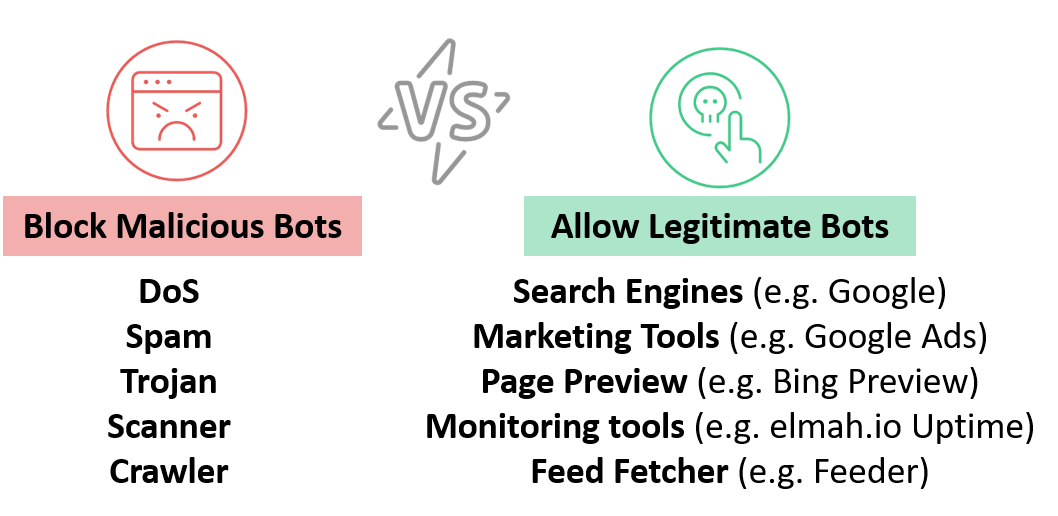
FortiWeb’s Known Bots feature is designed to help manage and differentiate between legitimate bot traffic (such as search engine crawlers) and malicious bots (such as DDoS bots, spammers, or content scrapers). By doing so, it helps protect your websites, mobile applications, and APIs from unwanted bot attacks without disrupting the flow of critical and beneficial traffic.

Watch the video on Known Bots by clicking this link or accessing it via the right sidebar.

Machine Learning Based Bot Detection

FortiWeb's AI-based machine learning bot detection enhances traditional signature and threshold-based methods by identifying sophisticated bots that might otherwise evade detection.

  • It analyzes user behavior across thirteen dimensions, such as the frequency of HTTP requests and the use of illegal HTTP versions, without requiring manual threshold configuration.

  • Using a Support Vector Machine (SVM) algorithm, FortiWeb automatically learns the behavior patterns of regular users, comparing incoming traffic to these patterns to identify anomalies.

  • If user behavior changes significantly—due to application updates, for example—FortiWeb adapts by refreshing its model to maintain accurate detection. This automated, adaptive approach reduces the need for manual adjustments and experimentation, ensuring more effective and efficient bot detection.

Watch the video on Machine Learning Based Bot Detection by clicking this link or accessing it via the right sidebar.

Advanced Bot Protection

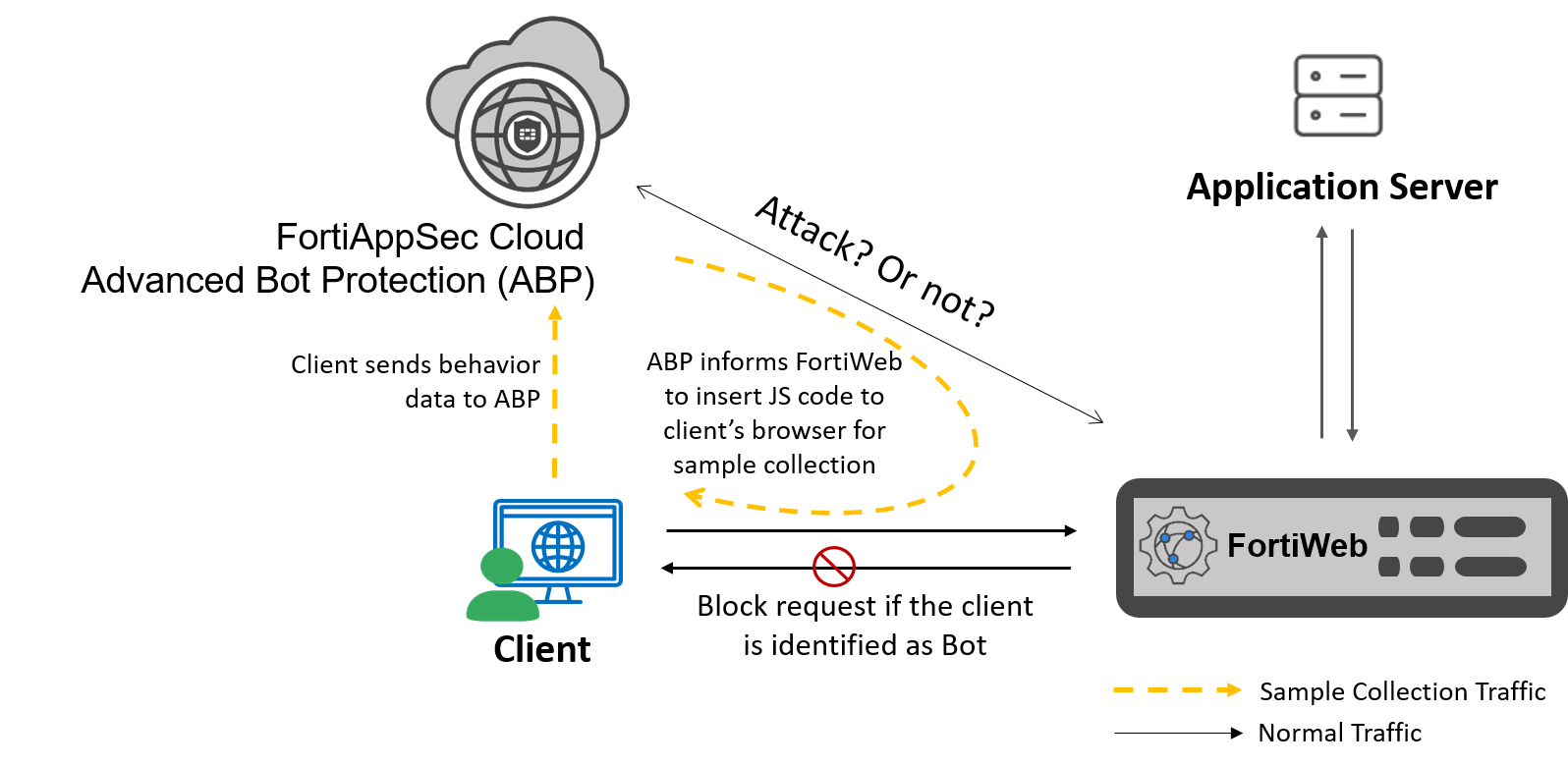
FortiWeb has integrated the FortiAppSec Cloud’s Advanced Bot Protection (ABP) service. It is a Fortinet SaaS advanced bot mitigation solution designed to detect and protect against sophisticated bots.

To detect bot activity, the ABP service injects a lightweight JavaScript into the client’s browser. This script collects behavioral data and request samples, which are then used to train a machine learning model capable of identifying patterns associated with normal user interactions.

All communication between FortiWeb and the ABP service is encrypted using TLS. To ensure authenticity and integrity, both FortiWeb and ABP present certificates to establish mutual TLS authentication. This safeguards the attack query process from potential interception or tampering by malicious actors.

Watch the video on Advanced Bot Protection by clicking this link or accessing it via the right sidebar.

DDoS Protection

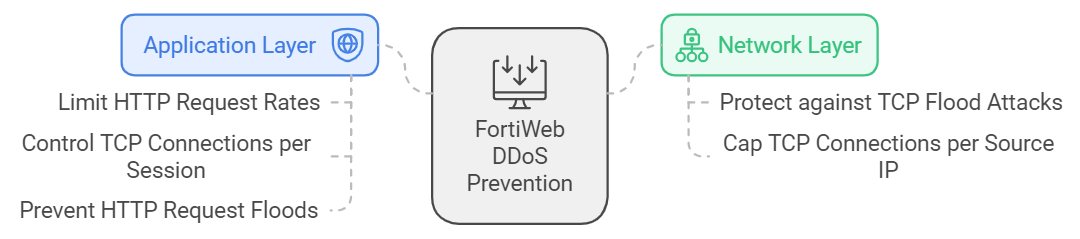
FortiWeb provides Application Layer DoS Prevention and Network Layer DDoS Prevention.

  • FortiWeb’s Application Layer DoS Prevention strategies aim to mitigate malicious traffic like HTTP floods and high connection rates while safeguarding legitimate user access. This is achieved by limiting HTTP request rates, controlling TCP connections per session, and preventing HTTP request floods.

  • For Network Layer DDoS Prevention, FortiWeb offers protection against TCP flood attacks by capping the number of fully-formed TCP connections per source IP. This helps prevent network-level attacks that attempt to exhaust server resources by opening an excessive number of TCP connections, thereby maintaining server stability and performance.

Related Videos

sidebar video

Mitigating Bots with FortiWeb: Overview

  • 67 views
  • 9 months ago
sidebar video

FortiWeb Bot Protection: Biometrics based Bot Detection

  • 33 views
  • 9 months ago
sidebar video

FortiWeb Bot Protection: Threshold based Detection

  • 36 views
  • 9 months ago
sidebar video

FortiWeb Bot Protection: Bot Deception

  • 28 views
  • 9 months ago
sidebar video

FortiWeb Bot Protection: Mitigating Known Bots

  • 24 views
  • 9 months ago
sidebar video

FortiWeb Bot Protection: Machine Learning based Protection

  • 62 views
  • 9 months ago
sidebar video

FortiWeb Bot Protection: Integrating with FortiAppSec for Advanced Bot Protection

  • 68 views
  • 9 months ago

WAF features against bot attacks

WAF features against bot attacks

Bot attacks are malicious activities carried out by automated software programs, known as bots. These attacks exploit vulnerabilities in web applications, APIs, and network infrastructure to achieve various malicious goals, such as data theft, service disruption, or fraud. Unlike legitimate bots (e.g., search engine crawlers), malicious bots are designed to mimic human behavior and can execute tasks at a scale and speed that humans cannot match.

FortiWeb offers a range of features specifically designed to detect and mitigate bot attacks, providing robust protection for web applications and APIs. Using a combination of behavioral analysis, AI-based detection, and rate-limiting controls, FortiWeb can identify and block malicious bots while ensuring a seamless experience for legitimate users.

Here are the key features FortiWeb employs to defend against bot attacks.

Biometrics-Based Bot Detection

FortiWeb’s Biometrics-Based Bot Detection is a sophisticated feature designed to differentiate between human users and bots by analyzing client-side interactions, such as mouse movements, keyboard inputs, screen touches, and scrolling behavior. This method provides a more nuanced approach to bot detection, particularly useful for mitigating advanced bots that can bypass simpler detection mechanisms like IP blocking or user-agent validation.

Watch the video on Biometrics-Based Bot Detection by clicking this link or accessing it via the right sidebar.

Threshold-Based Bot Detection

FortiWeb’s Threshold-Based Bot Detection is a feature that helps distinguish between human users and automated bots by monitoring for suspicious behaviors that occur at abnormal rates, such as the frequency of 403 and 404 response codes, attack signatures, slow attack activities, content scraping activities, and illegal user scan.

Watch the video on Threshold-Based Bot Detection by clicking this link or accessing it via the right sidebar.

Bot Deception

FortiWeb’s Bot Deception feature is a proactive defense mechanism designed to detect and trap malicious bots, such as web crawlers, by inserting hidden links into the HTML response pages. Legitimate users, such as human visitors using a browser, will not interact with these invisible links, but bots (especially web crawlers) may inadvertently follow these links, exposing their automated behavior. Once identified, FortiWeb can take action against these bots, such as blocking their requests or logging the activity for further investigation.

Watch the video on Bot Deception by clicking this link or accessing it via the right sidebar.

Known Bots

FortiWeb’s Known Bots feature is designed to help manage and differentiate between legitimate bot traffic (such as search engine crawlers) and malicious bots (such as DDoS bots, spammers, or content scrapers). By doing so, it helps protect your websites, mobile applications, and APIs from unwanted bot attacks without disrupting the flow of critical and beneficial traffic.

Watch the video on Known Bots by clicking this link or accessing it via the right sidebar.

Machine Learning Based Bot Detection

FortiWeb's AI-based machine learning bot detection enhances traditional signature and threshold-based methods by identifying sophisticated bots that might otherwise evade detection.

  • It analyzes user behavior across thirteen dimensions, such as the frequency of HTTP requests and the use of illegal HTTP versions, without requiring manual threshold configuration.

  • Using a Support Vector Machine (SVM) algorithm, FortiWeb automatically learns the behavior patterns of regular users, comparing incoming traffic to these patterns to identify anomalies.

  • If user behavior changes significantly—due to application updates, for example—FortiWeb adapts by refreshing its model to maintain accurate detection. This automated, adaptive approach reduces the need for manual adjustments and experimentation, ensuring more effective and efficient bot detection.

Watch the video on Machine Learning Based Bot Detection by clicking this link or accessing it via the right sidebar.

Advanced Bot Protection

FortiWeb has integrated the FortiAppSec Cloud’s Advanced Bot Protection (ABP) service. It is a Fortinet SaaS advanced bot mitigation solution designed to detect and protect against sophisticated bots.

To detect bot activity, the ABP service injects a lightweight JavaScript into the client’s browser. This script collects behavioral data and request samples, which are then used to train a machine learning model capable of identifying patterns associated with normal user interactions.

All communication between FortiWeb and the ABP service is encrypted using TLS. To ensure authenticity and integrity, both FortiWeb and ABP present certificates to establish mutual TLS authentication. This safeguards the attack query process from potential interception or tampering by malicious actors.

Watch the video on Advanced Bot Protection by clicking this link or accessing it via the right sidebar.

DDoS Protection

FortiWeb provides Application Layer DoS Prevention and Network Layer DDoS Prevention.

  • FortiWeb’s Application Layer DoS Prevention strategies aim to mitigate malicious traffic like HTTP floods and high connection rates while safeguarding legitimate user access. This is achieved by limiting HTTP request rates, controlling TCP connections per session, and preventing HTTP request floods.

  • For Network Layer DDoS Prevention, FortiWeb offers protection against TCP flood attacks by capping the number of fully-formed TCP connections per source IP. This helps prevent network-level attacks that attempt to exhaust server resources by opening an excessive number of TCP connections, thereby maintaining server stability and performance.